Saving the Writer’s Soul from Work-for-Hire Hell
What creative ownership really means, writing a sword and sorcery tale I can finally call my own, and how it all went wrong when I wasn’t writing for money
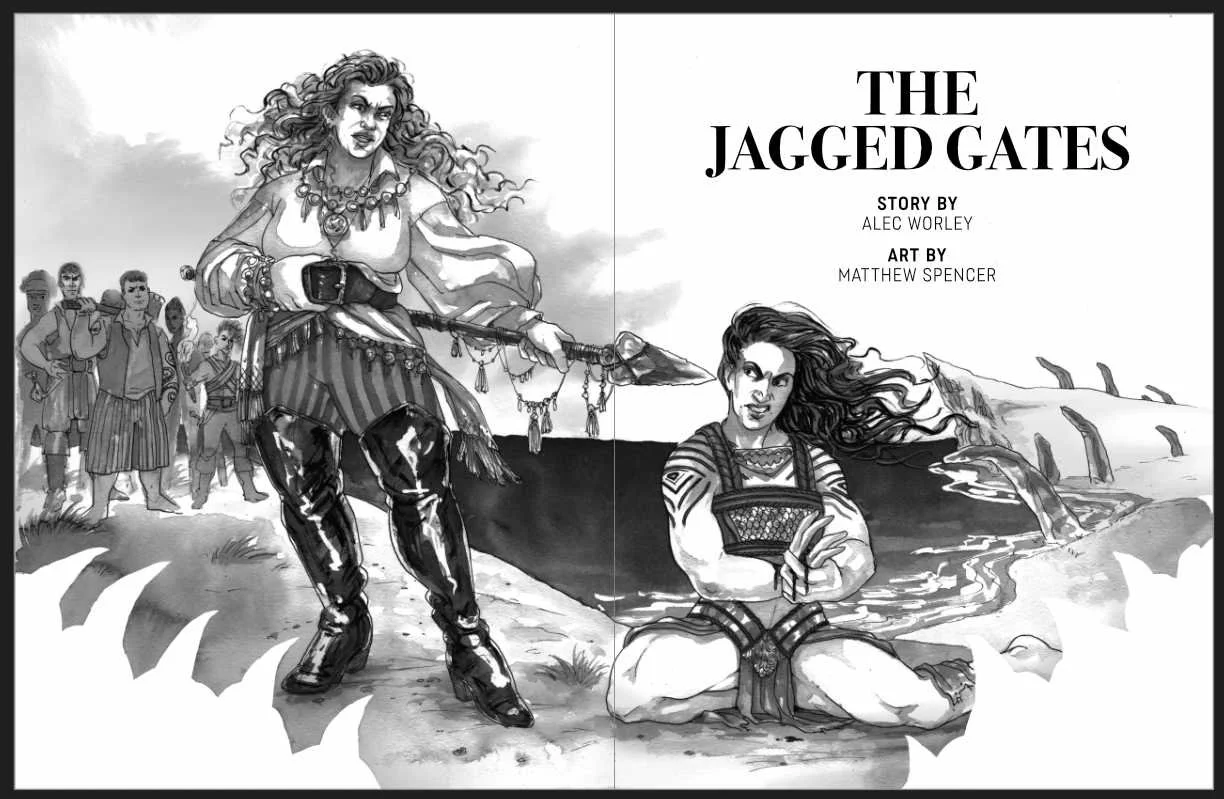
Illustration by Matt Spencer
A life of work-for-hire writing will only kill you if you’re good at writing.
The hack keeps a safe and sensible distance, their indifference to the given material, their often-justified contempt for the readership, insulates them from emotional harm. The hack survives because they give nothing, while the good writer makes an unwise investment of the heart.
Whether you write tie-in fiction or the comic-book adventures of household-name superheroes, writing those stories well, in a way that connects with and moves the reader – that is, the buyer – literally takes it out of you.
Good, emotive storytelling demands you look within and find some unique, personal connection to the material, something that brings you joy, whether that’s making younger readers’ laugh, playing with the grimdark of Warhammer, or speaking your mind on the monster/saviour paradox at the heart of Judge Dredd.
In the same way Tim Burton and Christopher Nolan feel very differently about Batman1, you need to offer your own emotional or intellectual angle on a given property, an angle that thrills you and adds something that differs from all that’s come before, coloured by the prism of your own lived experience.
THAT is the Frankenstein zap that can bestow life upon an otherwise soul-dead corporate property. It’s why Ryan Coogler’s Black Panther (2018) is one of my favourite Marvel movies. It feels alive and distinct, heartfelt, less like commercial product, even though it is.
And once you, the writer, have had your fun, exhausted yourself in saying everything you want to say, having brought those borrowed characters to life, you feel them depart the safety of your own head and disappear into the commercial wilderness.
And they take a piece of you with them when they go…