Excalibur (John Boorman, 1981): The Weird Wisdom of Epic Fantasy
Still a masterclass in movie mythmaking, knowing when to print the legend, and why the lessons of fantasy can only be learned by letting go
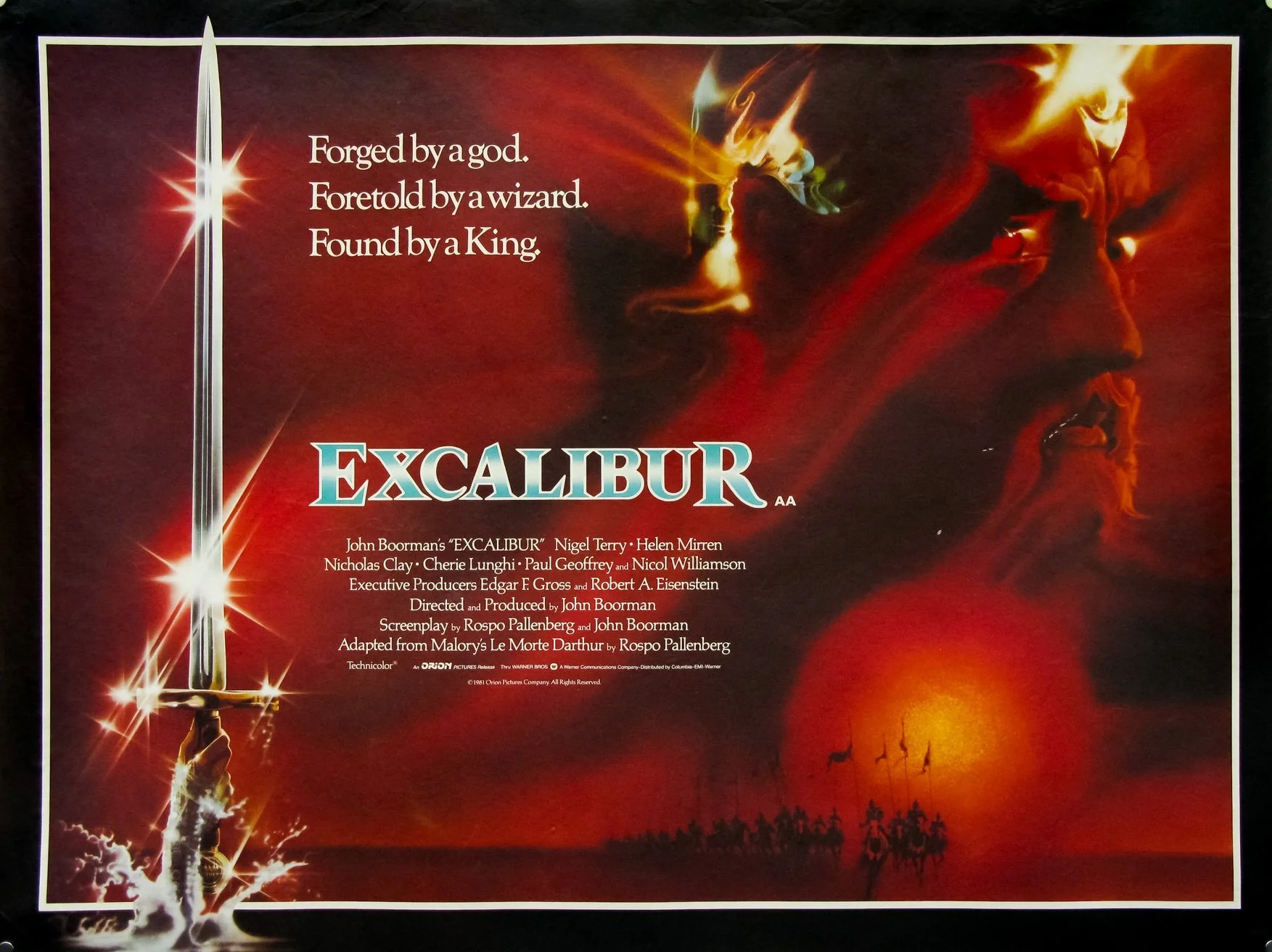
Image sourced from Film On Paper
Poor King Arthur.
It was so hard to take him seriously on film after Monty Python and the Holy Grail (1975), a mortal blow to Arthurian dignity dealt in a clatter of half-coconuts. So memorable is the misty medieval world of that beloved Python parody (ingeniously evoked by Terrys Jones and Gilliam on a budget almost half that of Hawk the Slayer) that serious Dark Age movies are still careful to avoid comparison with high-kicking, shrubbery-obsessed knights and anarcho-syndicalist peasants. (“Strange women lying in ponds distributing swords is no basis for a system of government!”)
But Arthurian cinema was already considered a lavish joke by then, a genre long overdue for parody.
Camelot (1967), starring Richard Harris and Vanessa Redgrave and based on the Broadway musical, was a mega-budget flop, famously savaged by the critics. MGM’s The Knights of the Round Table (1953) was a pompous Technicolour bore full of daft American accents. Hollywood’s take on the Matter of Britain was more Prince Valiant than Geoffrey of Monmouth, the stuff of Arthurian Westerns like Ivanhoe (1952), full of grown-ass men running around like schoolboys thwacking each other with wooden swords.
If you wanted a decent Arthurian movie in the 1970s, you either went to the arthouse and watched Robert Bresson’sLancelot du Lac (1974) or Eric Rohmer’s Perceval le Gallois(1978), or else caught a kids’ matinee re-release of Disney’s The Sword in the Stone (1963).
When John Boorman’s unapologetically straight-faced yet utterly fantastical Excaliburlanded in 1981, boasting tits, severed limbs and a dauntless commitment to its own mythmaking, many critics were left bemused…